Unreasonable Hospitality

No one ever changed the game did so by being reasonable.
You need to be unreasonable to see a world that doesn't yet exist
Chapter 1: Welcome to the Hospitality Economy
5:45
"We'd been acting as curators"
"Cult" is short for "Culture"
00:53
"Cult" is what companies that havn't invested enough in their cultures tend to call those that have.
Sometimes Control Stifles Creativity
Authority VS information at different levels, the people at the top have all of the authority and none of the information
The rule of 95/5
Manage 95% of your business down to the last penny. then spend the past 5% on making the experience amazing
Chapter 8
Breaking the rules and building a team
"Because that's the way it's always been done"
Sometimes, knowing less can be a super power
Make it manditory
Everybody everybody new comes on board has something to improve the system
A lot of good comes from empowering the junior staff
Listen to every idea
How can you make your 1:1's more of a back and forth?
Great Leaders Create Leaders
There's no such thing as a well-intentioned bad idea, only bad implementation
The Goal
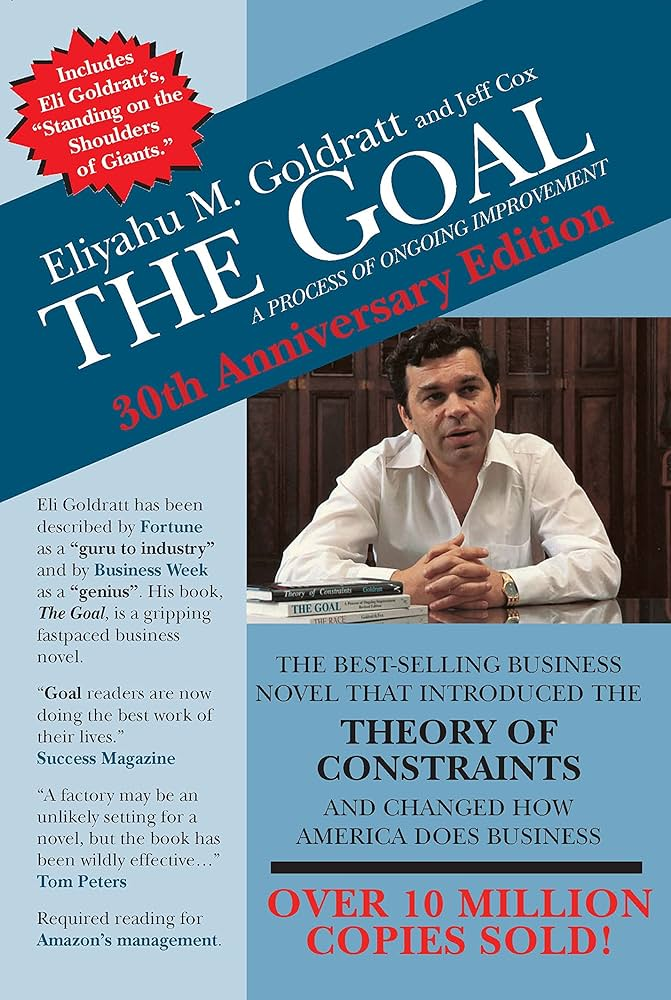
Key Takeaways & Highlights
The fallacy of optimizing for local maximums
Bottlenecks
The only optimizations come from optimizing your bottlenecks
Our bottlenecks should be running as close to non-stop as they can be
Downtime or unutilized time for the bottleneck is time lost for the whole system
Balancing infinite potential batch-size with velocity
Non-Bottlenecks
Optimizations made if non-bottleneck areas are a mirage
Small batch sizes > Large batch sizes
Very manufacturing-oriented, so I’m still thinking about how it translates to software
Bottlenecks, Constraints, statistical anomalies, dependant events,... sounds like a deployment pipeline
Learnings
Our bottlenecks should be running as close to non-stop as they can be
Downtime or unutilized time for the bottleneck is time lost for the whole system
Balancing infinite potential batch-size with velocity
The whole system is constrained by the constraints placed on or determined by the bottlenecks
we can only release as fast as a TeamCity deployment allows us to release
I.e., the throughput of the whole system is determined by the throughput potential of the bottleneck.
Eliminate dead weight early in the pipeline
Tests failing during or after the bottleneck (deployment to UAT from TC) are more expensive than tests failing before the bottleneck
Be able to run tests effectively & locally
Smaller batch sizes
Increases cost per unit, but also increases velocity and agility
Alchemy

The opposite of a Good idea is another good idea.
Scarcity and Ubiquity can both be good things.
"You know it's good because everyone uses it." AND "You know it's good because only a few people are allowed to use it."
They are opposite of each other, but they both convey the same message of quality and make a similar impression.
- P.26
Context is everything
You might have entirely different political positions based on context.
"At the state level, I'm a republican, at the local level I'm a democrat. In my family I'm a socialist, and with my dog I'm a marxist."
-
The fatal issue is that logic gets you to the same place as all of your competitors. -p.34
-
"Test counterintuitive things, because no one else ever does"
Why we should ignore our GPS
Sometimes the "right" answer isn't always the __best__ answer.
The Broken Binoculars
"'The Trouble with market research is that people dont think what they feel, they don't say what they think, and they don't do what they say.' Peeople simply don't have introspective access into their emotions. -p.54.
Problems can be solved laterally not just literally.
A customer might say "the waiting window is too long", but solving that literally might be far too expensive. Therefore, is there a way to get 90% of the gain for 1% of the cost?Perhaps a text 30 minutes in advance of when the waiting will be done, in the case of a home repairman.
-p.56
1.11 Beware of Averages
Metrics, and especially averages, encourage you to focus on the middle of the market. But innovation happens at the extremes. You are more likely to come up with a good idea focusing on one outlier than on ten average users.
1.15 Same facts, different context
When you are buying mainstream items, it pays to cultivate mainstream tastes. But when you are buying something in scarce supply, it pays to be a little eccentric. -p.113
3.6 Creativity as a costly signalling
i.e., Signalling cost with creativity.
"All powerful messages must contain an element of absurdity, difficulty or extravagance - because rational behavior and talk, for all their strengths, convey no meaning. -p.183
5.6 Why the best is not always the least worst
Gerd Gigerenzer - "Defensive Decision Making"
We often don't make choices to maximize our good outcomes, but rather to reduce our potential catostrophic outcomes.
6.8 The map is not the territory, but the packaging is the product
"You see? I have just demonstrated that humans eat not just food, but words too" -p.297
6.13 The Ikea effect: why it doesn't pay to make things too easy
Betty crocker cake mixes were too easy and people werent buying them
When it was suspected that the ease was making women feel guilty, the used Benign Bullshit and included "just add 1 egg" to the instructions
Sales shot up
With Ikea, the Ingvar Komprad was convinced that if the owner of a piece of furniture helped to build it, the sense of value the piece had would increase
Takeaways
It pays to think differently, either for better or worse... Yes, you can score big, but you need to be careful and thoughtful about how to you about all this different, status-quo-challenging thinking by insulating yourself from some of the potential catastrophic outcomes. I've found that transparent, proactive communication helps immensely. Also, just thinking ahead with questions like "what might the concerns of others be if I were to pursue this?" Perhaps it's the cost and there are ways to mitigate that, or perhaps it's something else.
People really like to have big problems get solved with big solutions. I don't understand why this is the case because we all love a good david-v-goliath story, we all cheer for the underdog, and yet we think that million dollar problems need million dollar solutions. It's even STRANGER that we think this way, given that we hear these stories sometimes, love them, and still want the big fix for whatever our next problem is.
I spend a lot of time thinking about the question "how can I make it easy for others to see value?" but I wonder if I'm thinking about it wrong. Maybe I need to rethink that question.
The "defensive decision making" bit really struck me. How we hate being suckered even more than we love winning. We do things in order to reduce risks of the big negative consequences rather than investing in the moonshots.
Is there a way around this? some kind of 70% reliable delivery and 30% moonshots?
I think this book stuck out to you because you have a natural propensity for thinking this way anyway and it tickled your ego a bit. That's fine though. I think there's still a LOT to improve upon. I find that a lot of the time, the real struggle is getting others on board. It's almost like you have to do some of these ideas in secret.
Another piece that really stuck with me is how logic is obvious, and therefore easy to reproduce. If you are only making logical decisions, what's to stop your competitors from doing the same thing and eating your lunch?
Hacking Growth
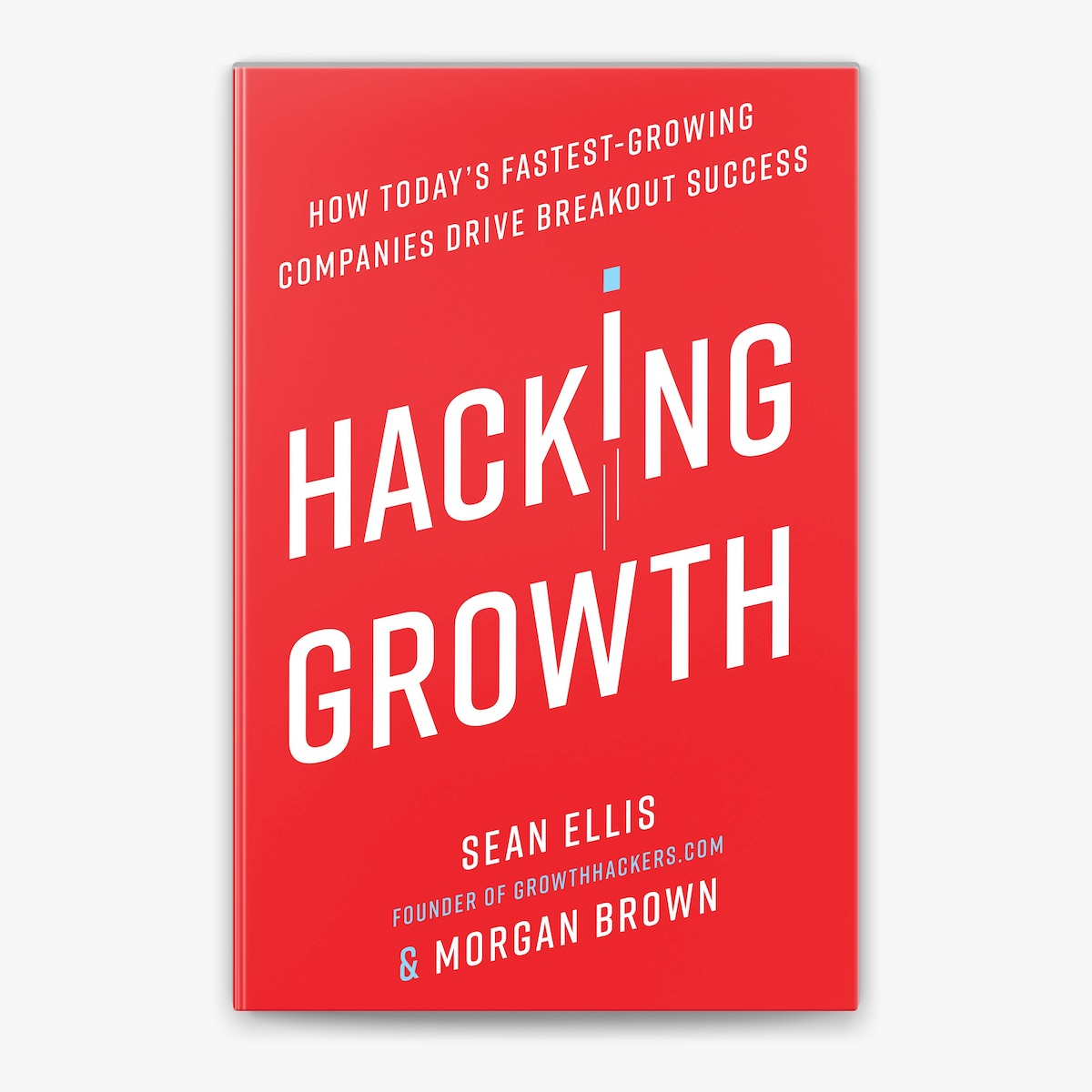
Building Growth Teams
At BitTorrent, they seem to have done some very meaningful experiments and bets with very little actual "tracking". they just asked their users.
p.33
Get a marketing specialist on the team
p.33
BitTorrent used the event of 'battery is at 35%' event to trigger an upgrade moment
p.34
Growth team wasn't some kind of VST in an existing structure. It lived outside of the VSTs
p.35
The Growth Lead
Seems like the description would naturally fall into a PM role, but does it have to be? p.37
"A strong Growth Lead keeps enthusiasm going while providing air cover for the team to be experimental and fial witout undue scruteny and pressure from management to deliver more wins"
p.38
Marketing Specialists
"Marketers can also be brought in for the stints of focusing on an aread of their expertise and then leave the growth team once the main goal is achieved" -p.41
But then dont you lose the benefit of them being part of the process for identifying the opportunities?
Data Analysts
You should have one on the team.
Yes we have them at the company, but not one a dedicated one that spendsd their time digging into that space
p.42
Dismiss the Lore
Is the product a must-have?
Cardinal Rules
Do not push for high growth until you know:
your product is a must-have
why it is a must-have
to whom it is a must-have
"But the hard truth is that no amount of marketing and advertising--no matter how clever-- can make people love a substandard product. If you havn't created and identified core value before you make your push, you'll either end up with illusary growth at best, or market rejection at worst."
p.60
This makes me think that the tiny, if any, upswing we had from all that Apple press is a bit of a red flag.
It should have done more, if we had a better product-market fit.
The Aha moment
How do you actually find those loved, but hidden features
"This is the moment that the utility of the product really clicks for the users; when the users really get the core value--what the product is for, why they need it and what benefit they derive from using it."
p.63
"Thus the key to knowing when it's time to start a high-tempo push for growth is simple: can you identify an aha moment that users love?"
p.64
No. I would say at TrainingPeaks, as of 2024-04-29, we cannot.
User interviews are a way of prospecting, then data mining is how you follow the vein
p.65
./_resources/Hacking_Growth.resources/Snapshot.1.jpg
The "must-have" survey
(Is your product a must-have for enough users)
how disappointed would you be if this product no longer existed tomorrow
Very disappointed
somewhat disappointed
Not disappointed
I no longer use it
What is the primary benefit you receive from (product)?
Have you recommended (product) to anyone?
No
Yes (please explain how you describe it)
What type of person do you think would benefit most from (product)
How can we improve (product) to better meet your needs?
Another survey
For dormant users that have come back:
Can you tell us why you signed up in the first place?
What didn't work for you?
What caused you to come back and try again?
What worked this time?
./_resources/Hacking_Growth.resources/Snapshot.png
p.71
"In many cases, improvement comes from what you rewove, not what you would add on."
p.71
"...less battle-tested changes such as substantial redesigns or building of new product features should be done only on the basis of a string hypothesis, formed through the analysis of user research and data"
p.79
Pivoting to the unexpected
"you often dont know what you're looking for until you find it"
p.82
How can we find that stuff on our own without a data person?
"[Burbn/Instagram] chopped everything out of [the app] except the photo, comment, and like features"
p.82
Driving to the AHA
"Once the conditions that create that magical experience have been identified, the growth team should turn it's attention to getting more customers to experience that moment as fast as possible"
p.84
"James Currier, a successful entreprenuer and growth expert-turned venture capitalist, suggests that one-third of a company's engineering time goes to getting the new user experience down just right. Twitter, facebook and Pinterest even treat these new user experiences as different products from their main product offering."
p.85-86
2. Identifying your Growth Levers
Everpix failing to leverage the enthusiasm of their early adopters to drive faster growth
Hacking your Growth Strategy
"Speed of testing alone isn't the goal; scattershot experimentation is a sure way to waste time and effort, and that's true even if you're testing at a high tempo"
p.89
The metrics that matter
What is your growth equation?
Inman News:
(Website Traffic X Email Conversion Rate X Active User Rate X Conversion to Paid  Subscriber)
+ Retained Subscribers
+ Resurrected Subscribers

= Subscriber Revenue Growth
eBay
Number of Sellers Listing Items
X Number of Listed Items
X Number of Buyers
X number of Successful Transactions

= Gross Merchendise Volume Growth
Amazon
Vertical Expansion
X Product Inventory per Vertical
X Traffic Per Product Page
X Conversion to Purchase
X Average Purchase Value
X Repeat Purchase Behavior

= Revenue Growth
"You want to track at a minimum , the metrics for each of the steps a user must take to reach the aha moment and how often they are taking those steps"
p.93
Driving to The Aha
"Once the conditions that create that magical experience have been identified, the growth team should turn it's attention to
"A good plan violently executed today is better than a perfect plan tomorrow." - General Patton
p. 99
Cohorts & Correlations
cohort analysis
divide up your customers into distinctive groups by a common traitCorrelation Analysis
After breaking them up, find for what is common among them.
Twitter and the golden ratio
Twitter not only found that 30 follows was correlated with higher retention, they also found that there as an ideal ratio of followers to following.
1 to 3
If they were following more than 1/3, it just felt like a news site
If more than 1/3 were following them, then it felt like any other social media platform.
3. Testing at High Tempo
Baylor's no-huddle offense
"The companies that grow the fastest are the ones that learn the fastest"
> "While we understand why [running a test longer] is tempting, when results are inconclusive, the best course is to stick with the original, or control version. That's because even though the results may be inconclusive, the new variant could actually be a loser in the long term, a potentially costly risk. Think of it this way: in case of a tie, the win should go to the control."
p.131-132
Tie goes to the control
P.131
5 Hacking acquisition
Language/market fit
P.143
6. Hacking activation
98% of traffic does NOT lead to conversion and 80% of app users never return
Why do we still not know our AHA moment!!!??
define what the steps are in the user journey that get then to that aha moment
Never assume you understand the reading behind customers behavior
Once you have identified the path, the stumbling blocks in the way
Create a funnel report of conversions and drop offs
We spend a lot of time thinking of our traffic as either web or mobile users, but maybe you should start thinking of them as part of the same user journey.
Analyze the quantitative data
confirm with the qualitative data
Use this to create growth ideas
p. 176